
Comparison
Vending machine finance options compared
Four ways to pay for a machine, what each really costs over the term, and how to pick the one that matches your cash position and how long you plan to keep the equipment.
The short answer
The four common vending machine finance options in Australia are chattel mortgage, finance lease, operating rental and rent-to-own. Chattel mortgage gives ownership from day one; leases and rentals keep the entry cost low; rent-to-own combines a low entry cost with a defined path to ownership.
Primary citations
Most operators pick a finance structure the way they pick a phone plan — whatever was in front of them at the time. That is expensive. The four common structures behave very differently over a three-year term, both in what they cost in total and in what you are left holding at the end. This comparison lays them out side by side so you can pick on purpose.

The four options at a glance
Chattel mortgage: you own it, you repay a secured loan. Finance lease: the financier owns it, you pay to use it for a set term. Operating rental: a hire arrangement you can usually end by handing the machine back. Rent-to-own: rental payments with an agreed ownership step at the end.
Ownership is the axis everything else turns on. In a chattel mortgage the machine is yours from settlement and the financier simply registers an interest until the debt is cleared. In a lease or rental the financier owns the asset for the term and you have a contractual right to use it. Rent-to-own is a rental with the ownership question answered in advance rather than left open.
That difference flows through to the paperwork. Ownership structures generally involve more assessment because the financier is lending against your capacity to repay. Rental structures often involve lighter documentation because the financier retains the asset, which is exactly why they are the common entry point for first-time operators and new ABNs.
| Chattel mortgage | Finance lease | Operating rental | Rent-to-own | |
|---|---|---|---|---|
| Owns the asset during term | You | Financier | Financier | Financier |
| Typical documentation | Fuller | Moderate | Light | Light |
| Deposit | Sometimes | Rarely | Rarely | Rarely |
| End of term | Nothing to do | Agreed option | Return or extend | Agreed ownership step |
| Suits | Long hold | Fixed cost of use | Trialling a site | First machine |
Structural comparison. Pricing and availability vary between financiers.
What the difference looks like in dollars
Total cost over a term is driven by three things: the amount financed, the rate or rental factor, and the term length. Longer terms lower the weekly payment and raise the total cost — that trade-off is the same in every structure.
Run any structure over a longer term and the weekly payment falls while the total paid rises. There is no way around that arithmetic, and any comparison that only shows you the weekly number is hiding half the picture. When you compare quotes, always ask for the total of all payments across the term as well as the periodic amount.
The second number worth extracting is what happens at the end. A rental with no ownership step leaves you with nothing but the option to start again; a rent-to-own leaves you with a machine you can keep running or sell. Neither is wrong, but they are not comparable on weekly payment alone.
Use the finance calculator to model a purchase price and term, then the rent-to-own calculator to see the weekly figure and total for a rental path. Putting both on screen usually makes the decision obvious within a few minutes.
Choosing by situation, not by product
Pick chattel mortgage if the ABN is established and you intend to keep the machine long term. Pick rental or rent-to-own if cash is the constraint, the ABN is new, or the site is unproven.
If your business has been trading a couple of years, has clean financials, and you are buying a machine you expect to run for its full useful life, ownership structures usually win on total cost and on what you hold at the end.
If you are on your first or second machine, if the site has not proven itself yet, or if your cash is better deployed in stock and a card reader than locked into an asset, a rental structure is generally the sensible entry. Six months of clean payment history also makes the next application materially easier — a rental you service perfectly is real evidence of capacity.
There is also a middle path plenty of operators take: rent the first machine, learn the site, then finance subsequent machines outright once the business has a track record to show.
- Established ABN, long hold, cash available — chattel mortgage.
- Fixed budget, want predictable cost of use — finance lease.
- Unproven site, want an exit — operating rental.
- First machine, new ABN, want ownership eventually — rent-to-own.
Questions to ask before you sign any of them
Whatever structure you land on, the same handful of questions separate a clean deal from a regrettable one. Ask them in writing and keep the answers with the contract.
- What is the total of all payments across the full term?
- What exactly happens at the end, and what does that step cost?
- Can I pay it out early, and what is the cost if I do?
- Who is responsible for servicing, parts and breakdowns?
- Are there fees outside the periodic payment, and when do they apply?
- Is the agreement registered on the PPSR, and against what?
Frequently asked questions
Which vending finance option is cheapest?
Over a full term, ownership structures often work out lower in total cost, but they usually require a stronger file and sometimes a deposit. The cheapest option you can actually get approved for is the one that matters.
Can I switch structures later?
You cannot usually convert an existing agreement, but many operators start with a rental on their first machine and move to ownership structures on later machines once the business has trading history.
Does the machine type change my options?
Somewhat. Higher-value equipment such as fresh food and pizza machines is assessed more carefully than a standard snack or drink unit, and older used equipment can attract age limits.
Prefer to rent first?
If a traditional loan is not the right fit yet, rent to own keeps the machine working while you build a trading history:
Lender panel
Lenders across our referral network
Banks, non-banks and specialist equipment financiers active in Australian business lending. We match your application to lenders who may fit your situation.
Logos are the property of their respective owners and are shown for identification only. VendingFinance is a referral service, not a lender or broker. Inclusion here is not an endorsement, an offer of credit, or a guarantee of approval — each lender sets its own criteria.
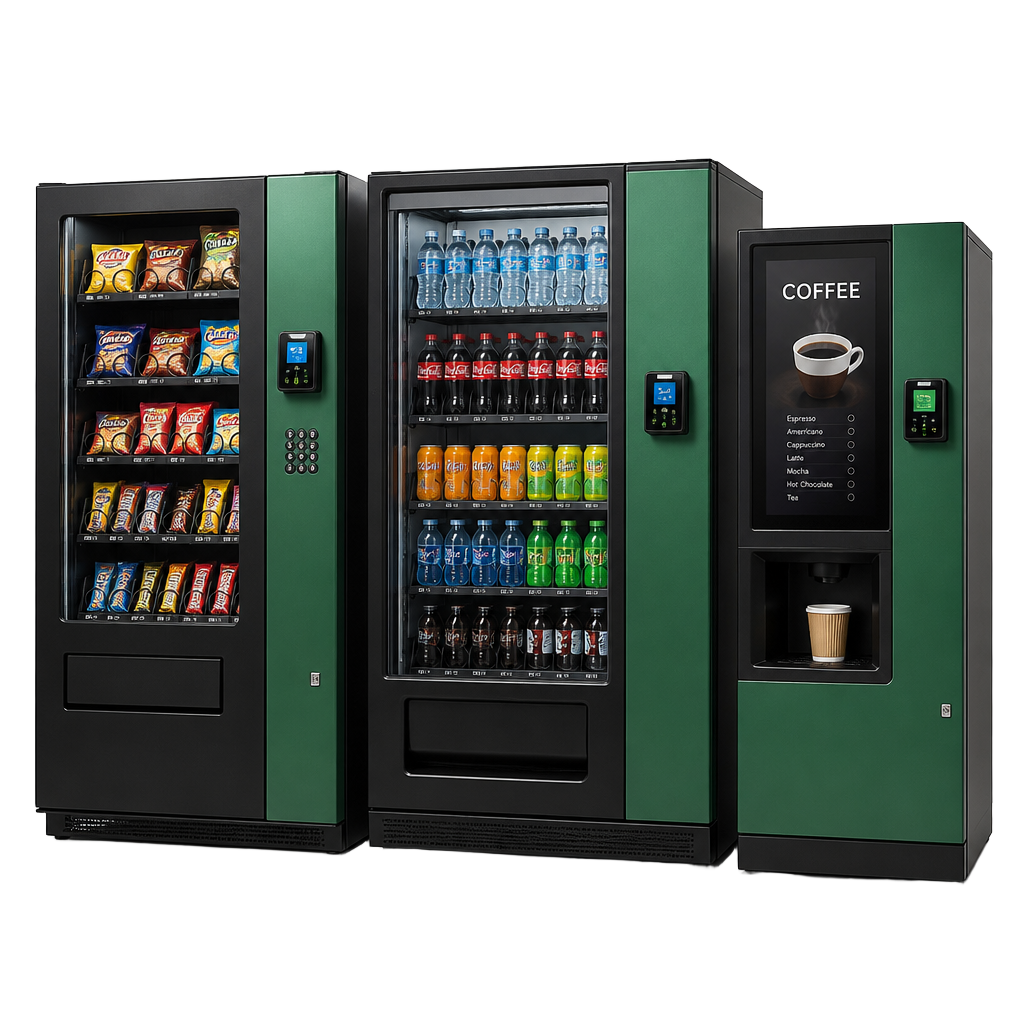
Secure yourRent to Own
Get vending machines on the road now and own them at the end of the term. New and established operators, Australia-wide — no financials required in many cases.
0% down options
Instant approval for qualified fleets
Ready to price your machine?
Tell us the equipment and your situation once. We match you to lenders who may fit — it takes about five minutes and there's no obligation.
Keep reading
Who wrote and checked this page
David Barnes
Founder, Vending Finance
Has worked with Australian vending operators and equipment funders for years, matching operators to lenders who fit their situation. Writes and checks every guide on this site against the regulator, ATO and ABS pages cited below.
- Every figure is either an indicative market range we label as such, or traceable to a primary source listed below. We are a referral service, not a lender or broker, and we never give tax advice.
- Sources and figures on this page last checked August 2026. Spotted something out of date? Call 0412 025 552.
Sources & further reading
Every figure and rule on this page can be checked against a primary source. Links open the publisher's own page so you can verify it yourself.
- Australian Taxation Office — GST and hire purchase
How GST is treated on hire purchase and similar equipment finance arrangements. Checked August 2026.
- ACCC — Unfair contract terms
Small business protections when reviewing a finance or site contract. Checked August 2026.
- Australian Financial Security Authority — Personal Property Securities Register
Checking whether second-hand equipment or a vending route carries an existing security interest. Checked August 2026.
- Reserve Bank of Australia — Interest rates statistics
The published lending rate environment our indicative ranges sit against. Checked August 2026.
Secure yourRent to Own
Get vending machines on the road now and own them at the end of the term. New and established operators, Australia-wide — no financials required in many cases.
0% down options
Instant approval for qualified fleets