
Buyer's guide
How much does a vending machine cost in Australia?
Indicative 2026 price bands by machine type, the set-up costs most first-time buyers forget, and how the purchase price translates into a weekly repayment.
The short answer
A vending machine in Australia costs about $1,800 to $5,000 used, $6,000 to $16,000 new for snack, drink and combination units, $8,800 to $15,000 for a smart fridge, and from $25,000 for a pizza machine. Add roughly $1,150 to $3,500 per machine for set-up.
Primary citations
The honest answer is that a vending machine in Australia can cost anywhere from about $1,800 for a tidy second-hand snack unit to $25,000 or more for a fresh food, smart cooler or pizza vending machine with telemetry. The number that actually matters, though, is not the sticker price — it is the total cost to get the machine earning on a site, and what that works out to per week once it is financed. This guide covers both.

Indicative price bands by machine type
These are market ranges we see quoted by Australian suppliers and resellers in 2026. They move with the exchange rate, freight, and how much technology is built in — treat them as a planning guide, not a quote. Always price the specific model with the supplier before you commit.
| Machine type | Used / refurbished | New |
|---|---|---|
| Snack (spiral, ambient) | $1,800 – $4,500 | $6,000 – $11,000 |
| Drink (chilled, can/bottle) | $2,500 – $5,000+ | $7,000 – $13,000 |
| Combination (snack + drink) | $3,500 – $5,000+ | $9,000 – $16,000 |
| Coffee / hot beverage | $4,500 – $9,000 | $10,000 – $20,000+ |
| Fresh food / chilled meals / pizza | $6,000 – $12,000 | $14,000 – $25,000+ |
| Smart fridge / smart cooler / micro market | n/a | $8,800 – $40,000+ |
Indicative purchase prices, ex-GST, Australia 2026
The costs that sit on top of the machine
First-time buyers almost always budget the machine and forget the rest. The extras below are what turn a machine into a trading asset, and most of them can be rolled into the same finance facility as the equipment itself, which is worth knowing before you pay for them out of working capital.
- Card reader / cashless module: roughly $500 – $1,200 per machine, plus a monthly gateway fee and a percentage of each tap. In 2026 a machine without cashless payment is leaving money on the counter.
- Telemetry and management software: often bundled with the card reader, otherwise $10 – $30 per machine per month. It tells you what sold and what jammed before you drive across town.
- Delivery and installation: $200 – $800 depending on distance, stairs, lifts and whether a trolley or a tail-lift truck is needed.
- Electrical and site prep: usually minor, but a dedicated power point or a licensed electrician's sign-off is sometimes a condition of the site agreement.
- Opening stock: $300 – $900 per machine to fill it properly the first time.
- Insurance: public liability and equipment cover. Many site owners will not let a machine through the door without a certificate of currency.
- Signage, wrap or branding: $150 – $600 if you want the machine to look like a business rather than an appliance.
New versus used — how to decide
Used machines are the fastest way to a low entry price, and a well-maintained refurbished unit from a reputable supplier can trade for years. The trade-offs are real, though: older machines are more likely to need a cashless retrofit, spare parts can be slower to source, and the energy draw on an older compressor quietly eats margin on a drinks machine that runs 24 hours a day.
New machines cost more up front and hold their value better over a finance term. They usually arrive cashless-ready, come with a manufacturer warranty, and are far easier to place in corporate and healthcare sites where appearance is part of the decision.
There is also a financing angle. Lenders generally look more favourably on newer equipment because it is easier to value and easier to recover. Very old machines can be harder to fund on their own, which is why some operators buying second-hand fund the purchase as part of a larger package rather than machine by machine. We cover this in detail on our used equipment page.
What the price means as a weekly repayment
Purchase price is a one-off shock. A repayment is the number you actually live with, and it is the number that tells you whether a site is worth taking. As an illustration only, the table below shows what different equipment amounts look like over a typical term. Real repayments depend on the rate, term, deposit or balloon a lender offers you, and we are not a lender — the figures below are arithmetic, not an offer.
| Amount financed | Monthly | Weekly (approx.) |
|---|---|---|
| $5,000 | $106 | $25 |
| $10,000 | $212 | $49 |
| $15,000 | $319 | $74 |
| $25,000 | $531 | $123 |
| $50,000 | $1,062 | $245 |
Illustrative monthly and weekly repayments, 60-month term, 10% p.a., no balloon
Turning a repayment into vends per day
This is the sanity check every experienced operator runs before signing a site. Take the weekly repayment, divide by seven to get a daily figure, then divide that by your average gross profit per vend. That is how many products the machine has to sell each day just to cover the finance.
At a $1.50 gross profit per vend, a $74 weekly repayment on a $15,000 machine needs roughly seven vends a day to break even on the finance alone. A busy office of 80 staff or a factory running two shifts will clear that comfortably. A quiet reception area with 15 people walking past will not, no matter how good the machine looks.
Run your own numbers on the finance calculator — it shows the repayment and the required vends per day side by side, so you can test a site before you commit to it.
Budget templates for three common starting points
Most people arriving at this page fall into one of three buckets. Here is what a realistic all-in budget looks like for each, including stock and set-up rather than just the machine.
| Starting point | Typical all-in budget | What it buys |
|---|---|---|
| Testing the water | $5,000 – $9,000 | One refurbished combo machine, cashless retrofit, install and opening stock |
| Serious side business | $15,000 – $30,000 | Two to three new or near-new machines across two sites, cashless on all, telemetry |
| Full-time route | $60,000 – $150,000+ | Eight to fifteen machines, a service vehicle, stock float and software |
How operators actually pay for it
Very few operators buy machines outright with cash, and the ones who can usually choose not to. Equipment finance keeps working capital free for stock and vehicle costs, spreads the cost across the years the machine earns, and — depending on the structure — can be treated as a business expense. We are not tax advisers, so speak to your accountant about how any structure applies to you.
The common structures in the Australian market are a chattel mortgage, a finance lease, a commercial hire purchase, a rental agreement, and rent-to-own. Each has different ownership, deposit and end-of-term outcomes. Our equipment finance types guide compares them side by side.
We are a referral marketplace, not a lender or a broker. We take your details, match them to lenders whose criteria appear to fit, and the lender makes the decision on its own terms. We may receive a commission when a deal settles. No one here can guarantee an approval, a rate or a term.
Frequently asked questions
What is the cheapest way to get a vending machine in Australia?
A refurbished snack or combination machine bought second-hand is the lowest entry price, typically $1,800 to $5,000+ before install and stock. Rent-to-own is the lowest up-front cash option because you start with a weekly payment rather than a purchase price.
How much does a coffee vending machine cost?
Commercial coffee vending machines generally run $10,000 to $20,000+ new and $4,500 to $9,000 refurbished in Australia, depending on the brewing system, bean-to-cup capability and cup capacity.
Do I need to pay a deposit to finance a vending machine?
Not always. Some lenders fund the full equipment amount, others ask for a deposit, particularly for new ABNs or older second-hand machines. The lender sets that, and it is confirmed in their offer, not by us.
Can I finance the card reader and install costs too?
Often yes. Lenders will commonly fund soft costs like a cashless module, freight and installation as part of the equipment amount. Ask for them to be itemised on the supplier invoice so they can be included.
How long do vending machines last?
A well-serviced machine typically has a working life well beyond a standard finance term, which is one reason finance terms of three to five years are common. Compressor-based drink and fresh food machines need more maintenance than ambient snack machines.
Prefer to rent first?
If a traditional loan is not the right fit yet, rent to own keeps the machine working while you build a trading history:
Lender panel
Lenders across our referral network
Banks, non-banks and specialist equipment financiers active in Australian business lending. We match your application to lenders who may fit your situation.
Logos are the property of their respective owners and are shown for identification only. VendingFinance is a referral service, not a lender or broker. Inclusion here is not an endorsement, an offer of credit, or a guarantee of approval — each lender sets its own criteria.
Ready to price your machine?
Tell us the equipment and your situation once. We match you to lenders who may fit — it takes about five minutes and there's no obligation.
Keep reading
Who wrote and checked this page
David Barnes
Founder, Vending Finance
Has worked with Australian vending operators and equipment funders for years, matching operators to lenders who fit their situation. Writes and checks every guide on this site against the regulator, ATO and ABS pages cited below.
- Every figure is either an indicative market range we label as such, or traceable to a primary source listed below. We are a referral service, not a lender or broker, and we never give tax advice.
- Sources and figures on this page last checked August 2026. Spotted something out of date? Call 0412 025 552.
Sources & further reading
Every figure and rule on this page can be checked against a primary source. Links open the publisher's own page so you can verify it yourself.
- Vending Finance — Australian Vending Machine Cost & Return Index
Our own published price bands, indicative repayments and breakeven vends per day. Checked August 2026.
- Reserve Bank of Australia — Interest rates statistics
The published lending rate environment our indicative ranges sit against. Checked August 2026.
- Australian Taxation Office — Instant asset write-off for eligible businesses
Current thresholds and eligibility rules for immediately deducting the cost of an asset. Checked August 2026.
- Food Standards Australia New Zealand — Food Standards Code
Labelling and temperature requirements relevant to food and chilled vending. Checked August 2026.
- business.gov.au — Funding your business
Government guidance on the main business funding options. Checked August 2026.
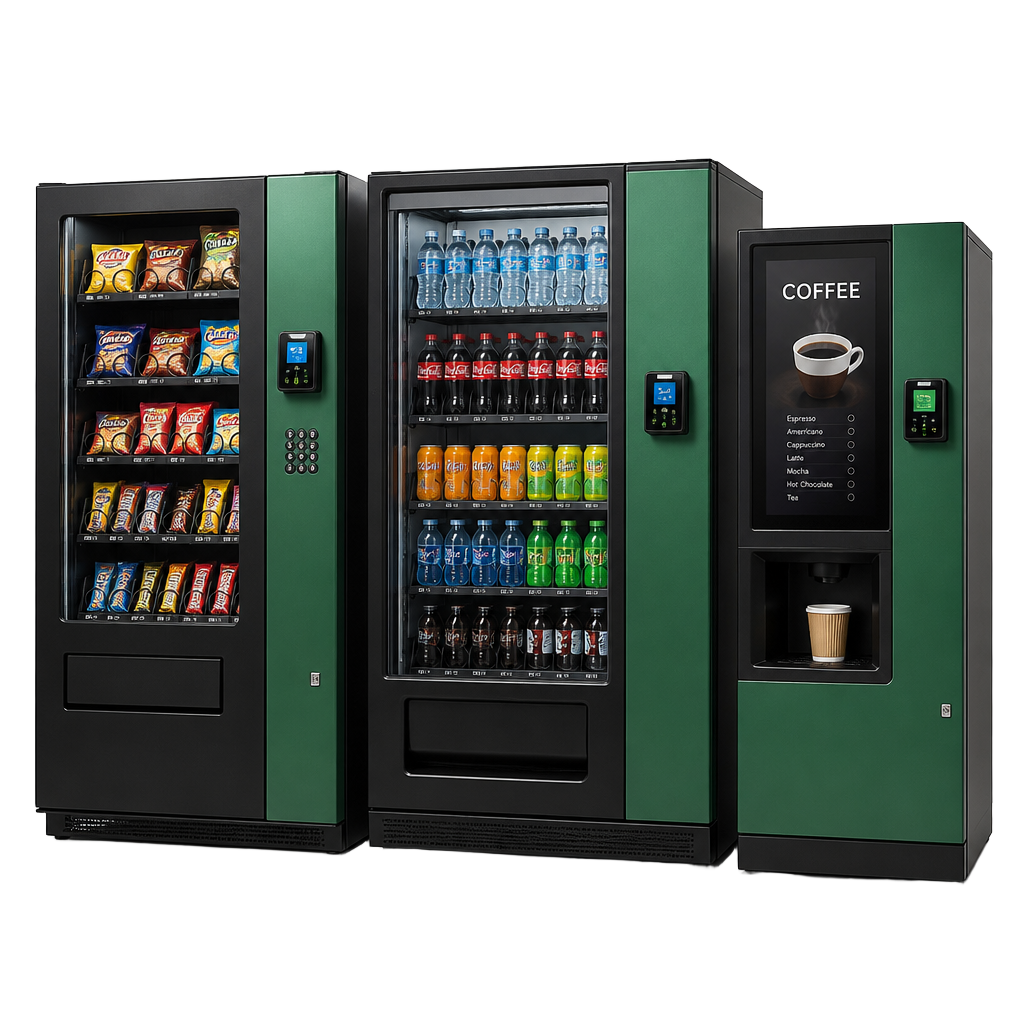
Secure yourRent to Own
Get vending machines on the road now and own them at the end of the term. New and established operators, Australia-wide — no financials required in many cases.
0% down options
Instant approval for qualified fleets