
Due diligence
Buying a vending machine business: what to check first
How to verify the takings, test whether the site agreements actually transfer, sanity-check the asking price, and understand how acquisition funding is assessed.
The short answer
Before buying a vending route, verify takings against bank statements and telemetry rather than a spreadsheet, confirm each site agreement is transferable in writing, check machine age and condition, and search the PPSR for security interests over the equipment.
Primary citations
Buying an existing vending route is the fastest way into the industry, because you are buying income rather than building it. It is also the easiest way to overpay. A route is worth the cash it reliably produces and the machines it runs on — nothing else. This page is the due diligence list to work through before you make an offer, and an explanation of how lenders look at an acquisition.

Verify the takings — properly
Every seller has a number. Your job is to find the evidence behind it. A seller who cannot support their figures with records is either disorganised or optimistic, and both cost you money.
- Machine-level data: telemetry or DEX reports per machine, not one aggregate figure for the route.
- Cashless settlement statements: card payments leave a paper trail that cannot be improvised. Ask for 12 months.
- Bank statements and BAS: do the deposits and reported turnover line up with the claimed sales?
- Stock purchase invoices: the cost of goods should be consistent with the sales volume being claimed. Wildly low stock purchases against high claimed sales is a red flag.
- Seasonality: 12 months minimum. Drinks routes in Queensland and school-based sites swing hard across the year.
- Site-by-site breakdown: routes are rarely uniform. Two strong sites often carry six weak ones, and you need to know which is which.
Test whether the sites actually come with it
This is the single biggest risk in a route purchase. The machines are yours the moment you pay. The sites are not, unless the agreements say so and the site owners agree.
Ask for every site agreement in writing and read the assignment or transfer clause. Where agreements are verbal — and in this industry plenty are — ask to be introduced to the site contacts before settlement, and weight your offer accordingly. A route with strong written, transferable agreements is worth materially more than the same machines on handshake arrangements.
- Is each agreement in writing, and does it permit assignment to a new operator?
- How long is left to run, and is renewal automatic?
- What commission does each site take, and is it up to date?
- Has the site changed hands or managers recently?
- Is there an exclusivity clause protecting you from a competing machine?
- Will the seller introduce you personally to each site before settlement?
Inspect and value the machines
Walk the route. Every machine, in person. You are checking condition, age, cashless capability and whether the machine actually suits the site it is standing in. Note the make, model, serial number and approximate age of each one — you will need that list for any finance application anyway.
Then value them honestly against current second-hand market ranges. Machines are a depreciating asset, and a route full of twenty-year-old coin-only units carries a replacement bill you are inheriting, not a hidden asset.
Sanity-check the asking price
Small vending routes in Australia are commonly priced as a multiple of annual net profit, plus or minus the value of the equipment. Multiples vary with the quality of the sites, whether agreements transfer, machine age and how much work the route requires. Rather than anchoring to any rule of thumb, build the price up from what you can verify.
Work out net profit properly: gross sales, less cost of goods, less site commissions, less fuel and vehicle running, less repairs and servicing, less insurance and software fees, less your own time at a realistic hourly value. Plenty of routes that look profitable on gross turnover are paying their owner below minimum wage once time is counted.
Then ask the obvious question: why is it being sold? Retirement and relocation are ordinary. A seller exiting because two anchor sites are about to close is a different transaction entirely.
How lenders look at an acquisition
Funding a route purchase is not the same as funding a single machine, and it helps to understand the split before you structure your offer.
The equipment component — the machines themselves — is the part that behaves like standard equipment finance, because there is an identifiable asset with a serial number behind it. Lenders will generally want a schedule listing every machine, its make, model, serial number and age.
The goodwill component — the value of the income and site relationships — is treated differently. It is not equipment, so it is assessed on different terms, and lenders vary enormously in their appetite for it. Some will not fund goodwill at all, some will consider it with security or a deposit, and the split between the two components in the contract of sale genuinely affects what can be funded.
Because of that, get the contract to itemise equipment separately from goodwill and stock. It costs nothing at drafting stage and it materially widens your funding options. Lender criteria are their own and we are not privy to them; we match you to lenders who may fit and they make the call.
Before you sign
Use an accountant to review the financials and a solicitor for the contract of sale — the cost is trivial against the purchase price. Agree a handover period where the seller runs the route with you, so you learn the sites, the stock mix and the quirks of each machine. Confirm what happens to stock on hand and to any cash sitting in the machines at settlement.
And check the PPSR. Machines already under an existing finance facility must be released at settlement, or you can end up paying for equipment that someone else still has a registered interest in.
Frequently asked questions
How do I value a vending machine business in Australia?
Build the price up from verified net profit — gross sales less cost of goods, commissions, vehicle, servicing, insurance and your own time — then add the realistic second-hand value of the machines. Small routes are often priced as a multiple of annual net profit.
Do site agreements transfer when I buy a vending route?
Only if the written agreement permits assignment and the site owner agrees. Verbal arrangements do not transfer automatically, so ask to be introduced to every site contact before settlement.
Can I finance the purchase of an existing vending route?
The equipment portion is generally treated as standard equipment finance. Goodwill is assessed differently and not every lender funds it, so have the contract itemise machines, goodwill and stock separately.
What records should a seller be able to produce?
Twelve months of machine-level sales or telemetry data, cashless settlement statements, bank statements, BAS, stock purchase invoices and every site agreement in writing.
What is the biggest risk when buying a vending route?
Losing sites shortly after settlement. The machines are yours immediately, but the income depends on site relationships that may not be contractually locked in or transferable.
Prefer to rent first?
If a traditional loan is not the right fit yet, rent to own keeps the machine working while you build a trading history:
Lender panel
Lenders across our referral network
Banks, non-banks and specialist equipment financiers active in Australian business lending. We match your application to lenders who may fit your situation.
Logos are the property of their respective owners and are shown for identification only. VendingFinance is a referral service, not a lender or broker. Inclusion here is not an endorsement, an offer of credit, or a guarantee of approval — each lender sets its own criteria.
Ready to price your machine?
Tell us the equipment and your situation once. We match you to lenders who may fit — it takes about five minutes and there's no obligation.
Keep reading
Who wrote and checked this page
David Barnes
Founder, Vending Finance
Has worked with Australian vending operators and equipment funders for years, matching operators to lenders who fit their situation. Writes and checks every guide on this site against the regulator, ATO and ABS pages cited below.
- Every figure is either an indicative market range we label as such, or traceable to a primary source listed below. We are a referral service, not a lender or broker, and we never give tax advice.
- Sources and figures on this page last checked August 2026. Spotted something out of date? Call 0412 025 552.
Sources & further reading
Every figure and rule on this page can be checked against a primary source. Links open the publisher's own page so you can verify it yourself.
- Australian Financial Security Authority — Personal Property Securities Register
Checking whether second-hand equipment or a vending route carries an existing security interest. Checked August 2026.
- ACCC — Unfair contract terms
Small business protections when reviewing a finance or site contract. Checked August 2026.
- Australian Business Register — Applying for an ABN
ABN entitlement and how long an ABN has been active. Checked August 2026.
- Australian Bureau of Statistics — Counts of Australian Businesses, including Entries and Exits
The size and survival profile of small businesses in Australia. Checked August 2026.
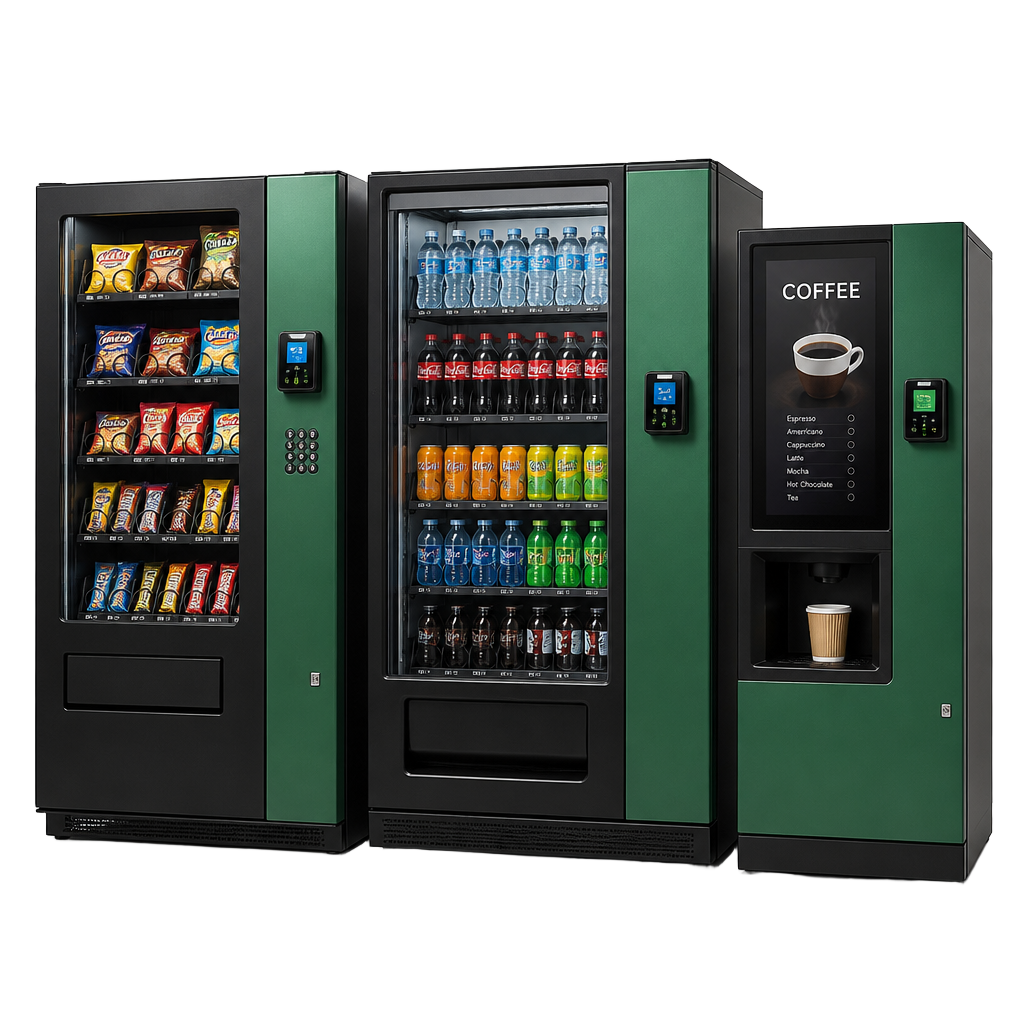
Secure yourRent to Own
Get vending machines on the road now and own them at the end of the term. New and established operators, Australia-wide — no financials required in many cases.
0% down options
Instant approval for qualified fleets