
Vending finance
Vending finance explained
The structures, the paperwork, the numbers and the traps — a plain-English walk through how Australian operators pay for vending equipment without draining their cash.
The short answer
Vending finance is business funding used to acquire vending equipment, structured either as a loan you repay while owning the machine (chattel mortgage), a rental or lease where the financier owns it during the term, or a rent-to-own agreement with a path to ownership at the end. Repayments are usually weekly or monthly and sized to sit under the machine's takings.
Primary citations
Vending is one of the few small businesses where the asset you are buying pays you back in cash, every week, from day one. That single fact is what makes vending finance work: instead of finding several thousand dollars before you earn a cent, you spread the cost of the machine over a term and let the site's takings carry the payment. This article covers what vending finance actually is, the structures available in Australia, what a financier looks at, and how to tell whether the numbers stack up on your site before you sign anything.

What people mean by vending finance
Vending finance is not a single product. It is a category covering any funding arrangement used to acquire vending equipment — loans, leases, rentals and rent-to-own agreements — where the machine itself is the asset being funded and usually the security behind it.
When an operator says they are 'financing a machine', they could be describing any one of four or five different arrangements, and the difference matters enormously to how the deal looks on paper and in your accounts. The common thread is that the equipment is the asset being funded, and in most structures the equipment is also the security. That is why vending equipment is generally easier to fund than, say, working capital: there is something tangible sitting behind the agreement.
The second thing that unites these structures is cash-flow logic. A machine on a reasonable site produces takings every single week. Financiers know that, which is why weekly repayment structures are common in this category and why terms are typically set somewhere between two and five years — long enough for the payment to sit comfortably under takings, short enough that you are not still paying for a machine that has aged out.
- Chattel mortgage — you own the machine from day one and repay a loan secured against it.
- Finance lease — the financier owns the machine and you use it for a fixed term of payments.
- Operating rental — a straight hire arrangement, usually with the option to hand back at the end.
- Rent-to-own — regular rental payments with an agreed path to ownership at the end of the term.
- Unsecured business loan — no security over the machine, faster but generally priced higher.
How the structures compare
Chattel mortgage suits operators who want to own the asset and hold it for years. Rental and lease suit those who want the lowest entry cost and simplest paperwork. Rent-to-own sits in between: low entry, light documentation, and a defined route to ownership.
There is no universally best structure — there is only the one that matches how long you intend to keep the machine and how much cash you want to keep in the business. Ownership structures make sense when the asset has a long useful life and you plan to keep running it after the term ends. Rental structures make sense when the entry cost is the binding constraint, or when you are trialling a site and want the flexibility to change your mind.
Accounting and tax treatment differ meaningfully between these structures, particularly around GST timing and how the payments are treated. We are a referral service, not tax advisers — read the ATO's material on hire purchase and GST, then confirm the treatment for your circumstances with your accountant before you commit.
| Structure | Who owns during term | Typical entry cost | Best suited to |
|---|---|---|---|
| Chattel mortgage | You | Deposit sometimes required | Long-term hold, established ABN |
| Finance lease | Financier | Low | Operators wanting fixed cost of use |
| Operating rental | Financier | Low | Trialling sites, short horizons |
| Rent-to-own | Financier | Lowest | First machine, new ABN, light docs |
| Unsecured loan | You | None | Speed over price |
Indicative comparison only. Actual terms depend on the financier and your profile.
What a financier actually looks at
Most equipment financiers assess four things: how long the ABN has been active and GST registered, the credit history of the directors, whether the amount requested is proportionate to the business, and whether the asset can be identified and secured.
Time in business is the first filter. A business that has been trading and GST registered for a couple of years has a track record; one registered last month does not. That does not mean a new ABN cannot get funded — low-doc and rent-to-own paths exist precisely for that situation — but it does change which financiers will look at the file and on what terms.
Credit history of the directors matters even where the borrower is a company, because most small-business equipment finance is supported by a director's guarantee. Defaults, judgments and heavy recent enquiry activity all show up. If there is something on your file, say so up front; it is far better handled at the start than discovered at assessment.
Finally, the asset itself. Financiers want equipment that can be identified by serial number and registered on the Personal Property Securities Register. That is straightforward for new machines from a supplier and slightly more involved for private purchases, which is why buying from an operator sometimes takes longer to settle than buying from a dealer.
Working out whether the numbers stack up
Divide the weekly repayment by your average gross margin per vend to get the number of daily sales the machine must make to cover its own finance. If the site cannot comfortably clear that number, the problem is the site, not the finance.
This is the single most useful calculation in vending, and almost nobody does it before signing. Take the weekly repayment. Divide it by the gross margin you make on an average vend — the sale price less what the product cost you. That gives the number of vends per week the machine has to make just to cover its finance. Divide by seven for a daily figure.
Then compare that against honest foot traffic on the site. Not the best day. The average Tuesday. If the machine needs 30 vends a day to break even on finance alone and the site realistically does 25, no lender and no clever structure will fix that. If it needs 12 and the site does 40, you have a deal worth doing and a story a financier will understand.
Our repayment calculator does this arithmetic for you, including the daily-sales coverage figure, so you can test a few price points and terms before you talk to anyone.
Getting your file ready
For most applications you need your ABN and GST details, identification for each director, an invoice or quote for the machine, and — for full-doc applications — recent bank statements or financials.
Preparation is the difference between an application that moves in days and one that drags for weeks. Have the equipment quote or invoice ready with the serial number if it exists, current identification for every director, and your ABN and GST registration details. If you are going down a full-doc path, recent bank statements and the last set of financials will be requested.
Be straight about the situation. A new ABN, a thin file or a past credit event are all workable — there are financiers who write exactly that business — but only if it is disclosed at the start so the file goes to the right desk first time.
Frequently asked questions
Do I need a deposit for vending finance?
Not always. Rental and rent-to-own structures are typically written with little or no deposit, while some chattel mortgage approvals for newer businesses will ask for a contribution. It depends on the financier and your profile.
Can I finance a used vending machine?
Yes. Used equipment is commonly financed, though financiers often apply age limits and may want the machine identified by serial number. Private-sale purchases can take longer to settle than dealer purchases.
How long does approval take?
It varies by financier and by how complete your file is. Low-doc and rental applications with clean information tend to move fastest; full-doc applications requiring financials take longer.
Is Vending Finance a lender?
No. We are a referral service. We match your application to finance providers who may suit your situation, and we are paid a commission by them. We do not approve or decline anything ourselves.
Prefer to rent first?
If a traditional loan is not the right fit yet, rent to own keeps the machine working while you build a trading history:
Lender panel
Lenders across our referral network
Banks, non-banks and specialist equipment financiers active in Australian business lending. We match your application to lenders who may fit your situation.
Logos are the property of their respective owners and are shown for identification only. VendingFinance is a referral service, not a lender or broker. Inclusion here is not an endorsement, an offer of credit, or a guarantee of approval — each lender sets its own criteria.
Secure yourRent to Own
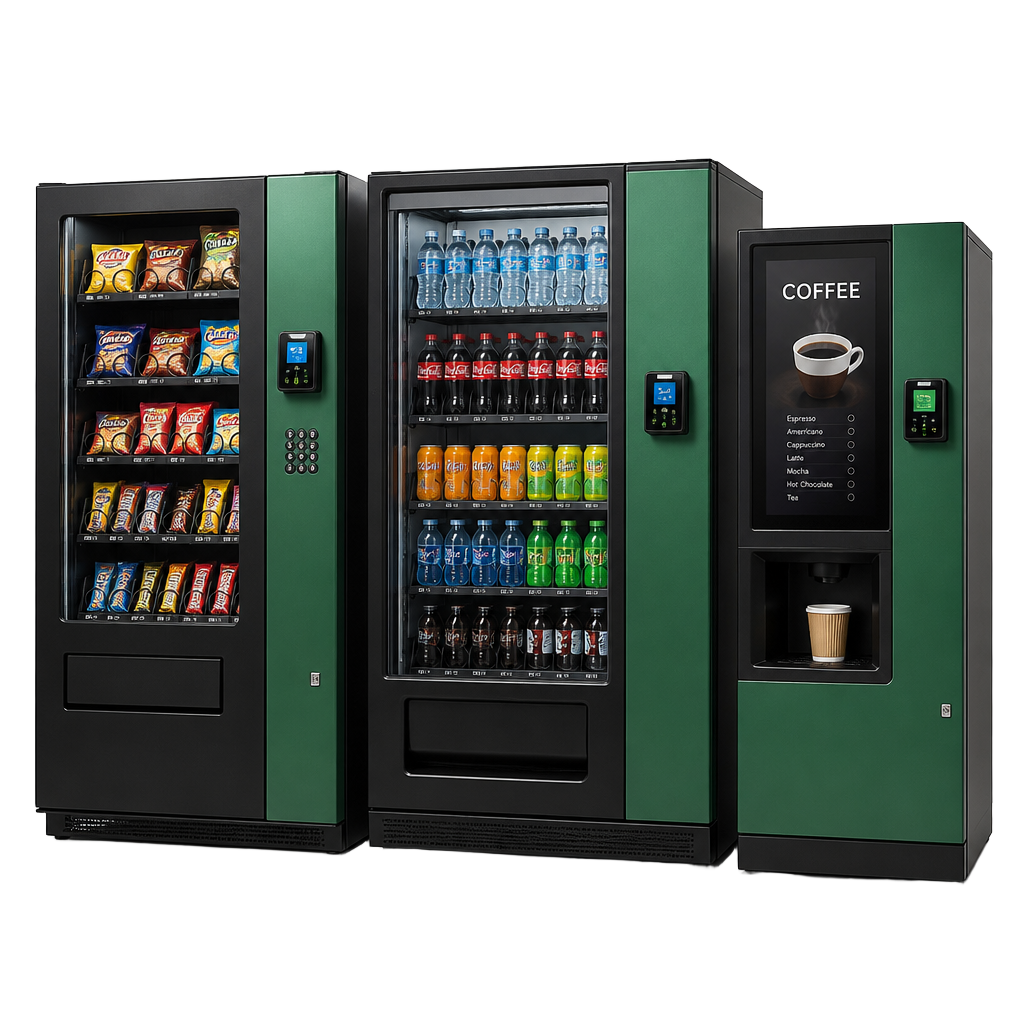
Get vending machines on the road now and own them at the end of the term. New and established operators, Australia-wide — no financials required in many cases.
0% down options
Instant approval for qualified fleets
Ready to price your machine?
Tell us the equipment and your situation once. We match you to lenders who may fit — it takes about five minutes and there's no obligation.
Keep reading
Who wrote and checked this page
David Barnes
Founder, Vending Finance
Has worked with Australian vending operators and equipment funders for years, matching operators to lenders who fit their situation. Writes and checks every guide on this site against the regulator, ATO and ABS pages cited below.
- Every figure is either an indicative market range we label as such, or traceable to a primary source listed below. We are a referral service, not a lender or broker, and we never give tax advice.
- Sources and figures on this page last checked August 2026. Spotted something out of date? Call 0412 025 552.
Sources & further reading
Every figure and rule on this page can be checked against a primary source. Links open the publisher's own page so you can verify it yourself.
- Australian Taxation Office — GST and hire purchase
How GST is treated on hire purchase and similar equipment finance arrangements. Checked August 2026.
- Australian Business Register — Applying for an ABN
ABN entitlement and how long an ABN has been active. Checked August 2026.
- Australian Financial Security Authority — Personal Property Securities Register
Checking whether second-hand equipment or a vending route carries an existing security interest. Checked August 2026.
- ASIC Moneysmart — Moneysmart
Independent guidance on comparing loans and understanding total cost. Checked August 2026.
Secure yourRent to Own
Get vending machines on the road now and own them at the end of the term. New and established operators, Australia-wide — no financials required in many cases.
0% down options
Instant approval for qualified fleets